
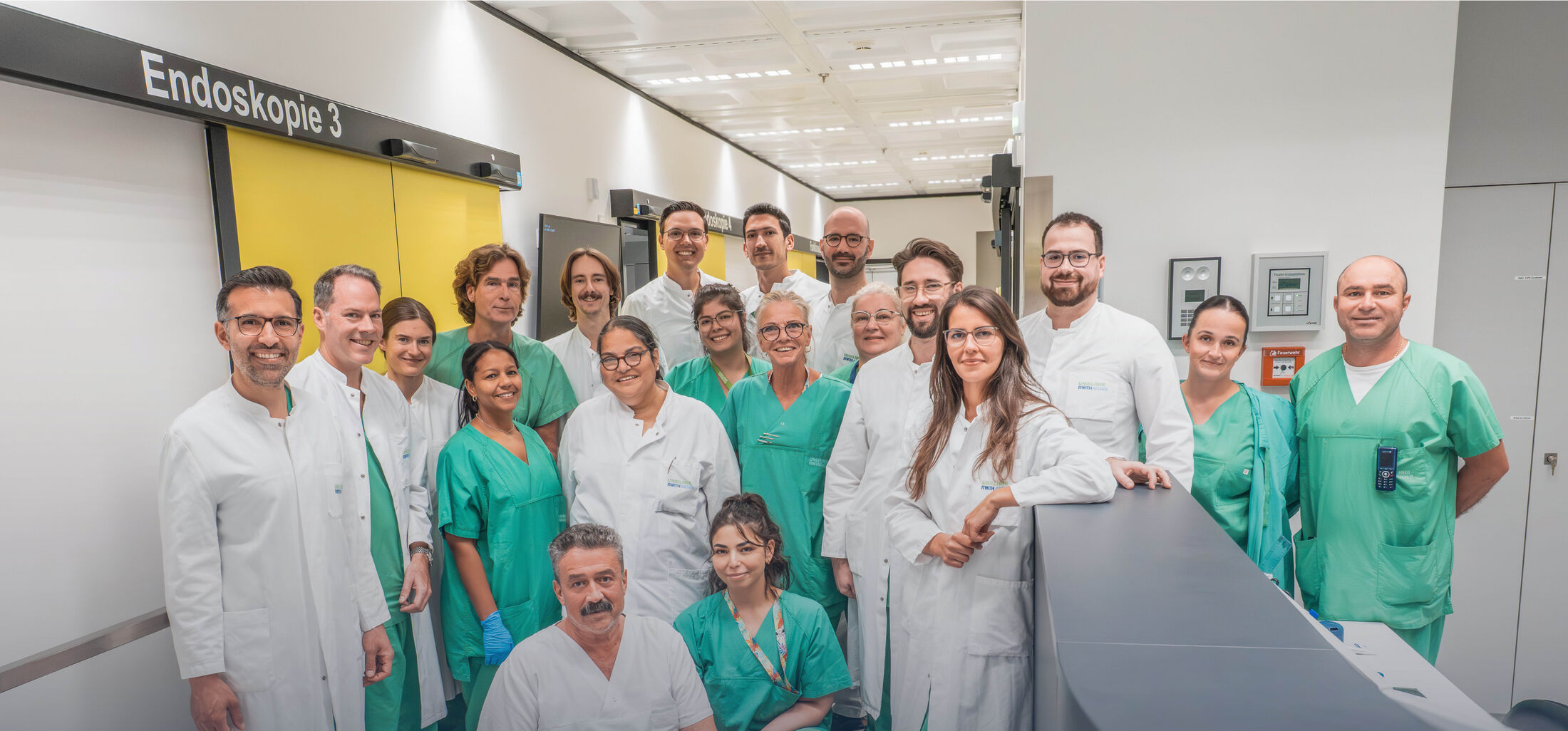

Dear patients, so that you can be well informed ahead of your examination, we are glad to provide you with our guidance on the Endoscopy Functional Unit, on informed consent, on preparation ahead of your examination, and on guidance for your behavior following your examination.
Before an endoscopic examination is carried out, informed consent regarding potential risks and complications is essential. If you are being cared for at one of our outpatient clinics here at the university hospital, or if you are currently an inpatient, your treating physician will hold a consent discussion with you. If you have not previously been under our care, one of our physicians will hold a consent discussion with you at an agreed appointment.
During this discussion, you will be informed about the course of the examination, its risks, and its side effects. This is documented on a consent form, which you may review again at your leisure after the discussion. If the examination is carried out on an outpatient basis, you will additionally receive a form containing guidance on behavior. If a colonoscopy is being planned, you will be shown how to cleanse your bowel ahead of the examination so that good examination results can be achieved. Here, too, you will receive a form so that you can review the behavioral guidance again afterward. Please understand that an examination cannot be carried out without adequate and timely informed consent.
Please bring at the day of your examination a referral form issued by your family doctor, as well as the completed and signed consent forms. Lab values are generally not required. The endoscopy is performed while you are fasting, for your protection and for better visualization. Your last food intake should therefore have been at least 6 hours prior. Please also refrain from consuming fluids and nicotine/smoking on the day of the examination. As part of the consent discussion, you should clarify to what extent your regularly taken medications should also be omitted on the morning of the examination day. In order to allow a larger tissue sample to be taken during the endoscopy, it may be necessary to discontinue beforehand any medications that affect blood clotting (e.g. ASA, Marcumar, Iscover, Plavix, Xarelto, Eliquis, Lixiana). Please discuss this individually with your treating physician.
Please note that a colonoscopy requires appropriate bowel cleansing, for which you should already begin adjusting your diet 5 days beforehand. Further information can be found in our flyer.
The examinations can be carried out either with local anesthesia (e.g. in the mouth/throat) or with sedatives administered via your vein (usually with the agent known as "propofol"). If you receive a sedative via the vein (so-called sedation), you will "sleep through" the examination.
For sedation, you will receive an intravenous line and additional oxygen via a nasal cannula. In addition, we monitor your pulse, blood oxygen level, and blood pressure during the examination. After the examination, you will remain under the same monitoring for a while in our separate recovery room, until you are once again awake and fit and can be discharged. Nevertheless, your reaction time remains impaired for a longer period. Depending on the sedative used, you may therefore not drive a car, operate machinery, or consume alcohol for 12-24 hours. You should also arrange for an accompanying person who can ensure that you get home safely.
For an outpatient examination, the examining physician will explain the examination findings to you afterward and hand you the written report. After the examination, you may generally eat and drink again; it is best to start with a small, light meal. The final discussion of findings, taking into account the final histological examination, takes place either with your referring physician or by appointment at our outpatient clinic.
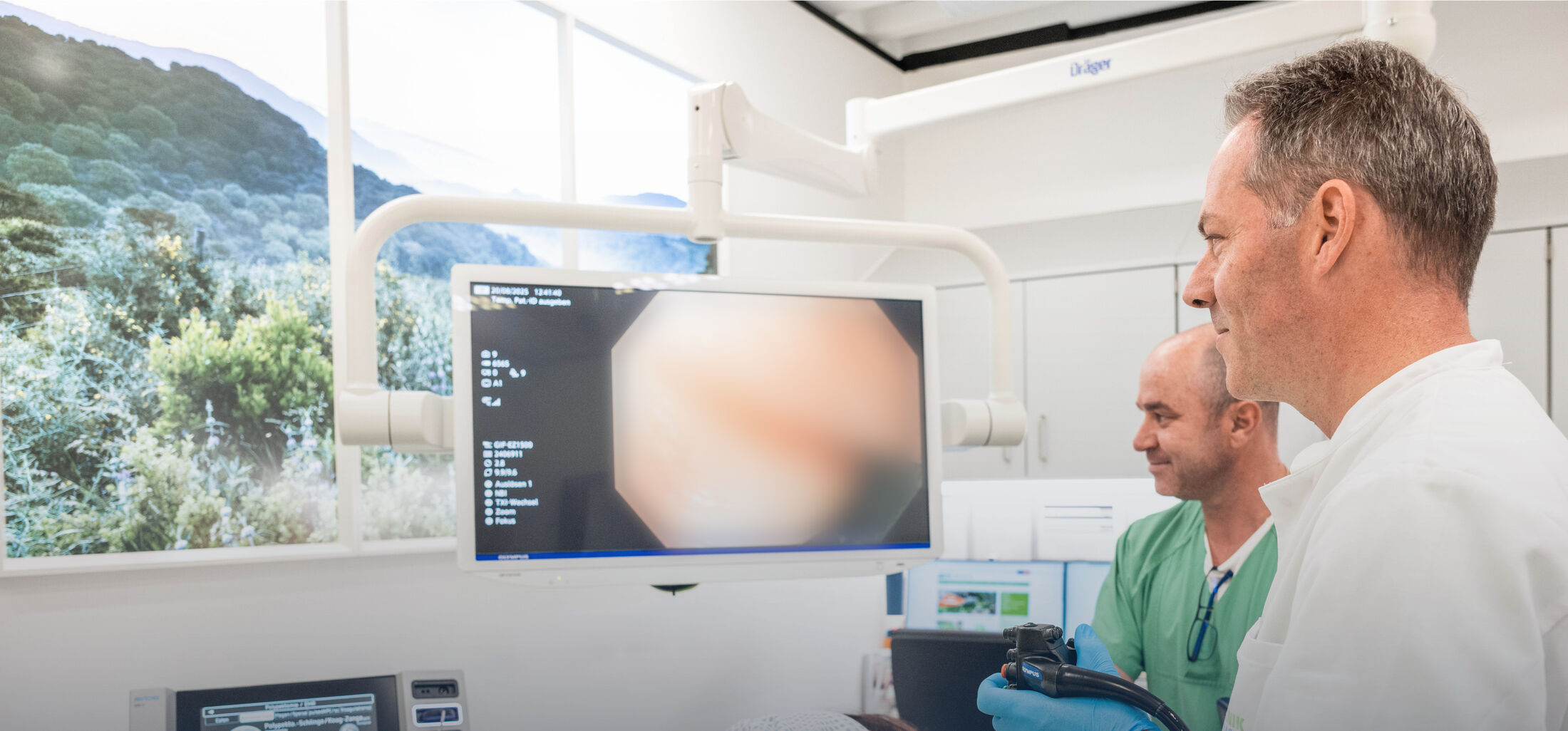
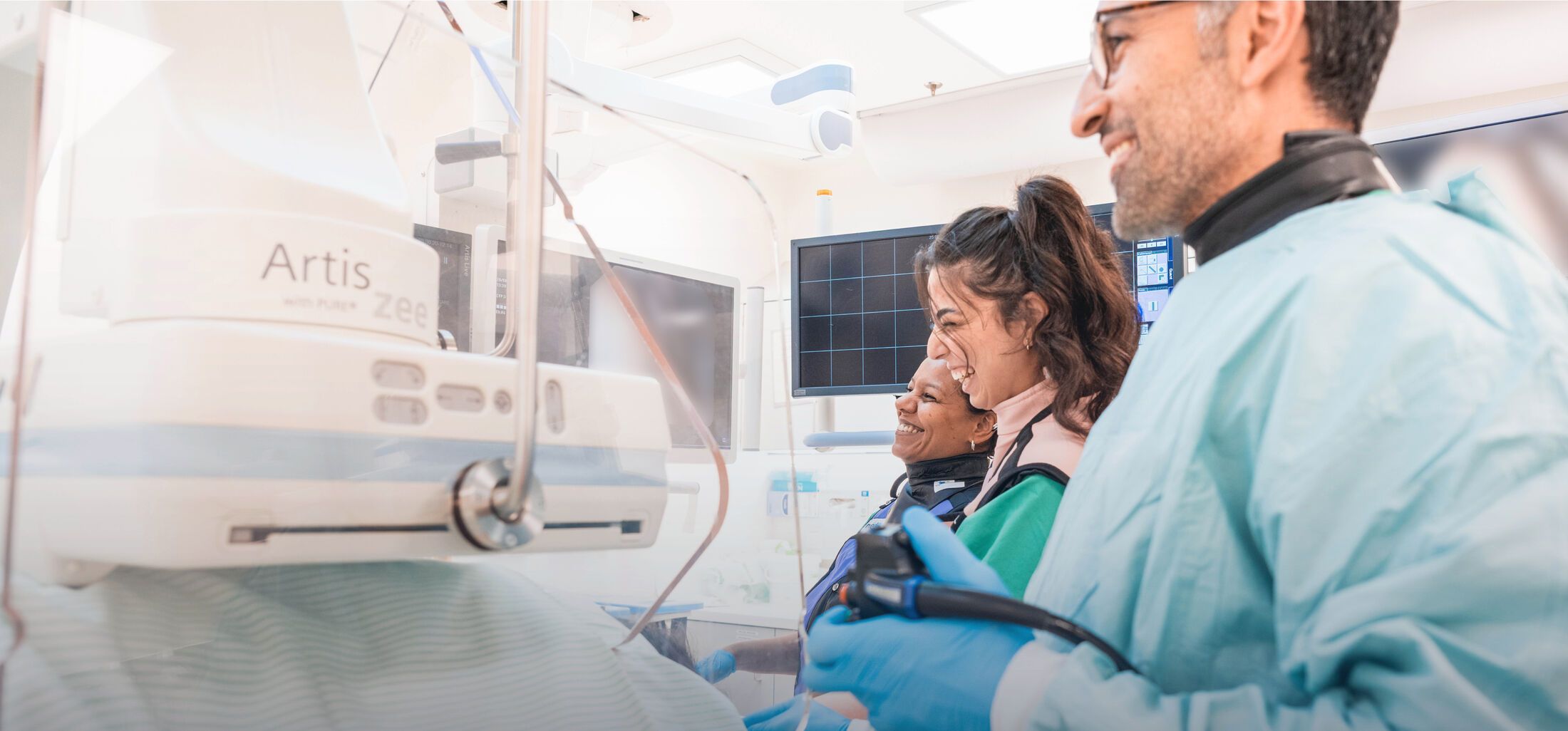
Our department is equipped, both spatially and technically, to the most modern standard, in order to ensure optimal patient care. The hygiene requirements for the department satisfy the highest standards and fulfill all specifications of the German (DGVS) and European (ESGE) professional societies, as well as of the Infection Protection Act and the Medical Devices Act. We have all standard endoscopes available and can offer all examinations and procedures. We have the newest generation of equipment from the manufacturers Olympus and Fujifilm, and where appropriate we also employ support systems using artificial intelligence. All examinations are performed gently, using CO2 (carbon dioxide). The endoscopes are hygienically reprocessed by our trained staff after every use and are subject to ongoing monitoring by the Department of Hospital Hygiene and the district government.

