
Teaching and Research Area of Hepatology (Bruns Lab)
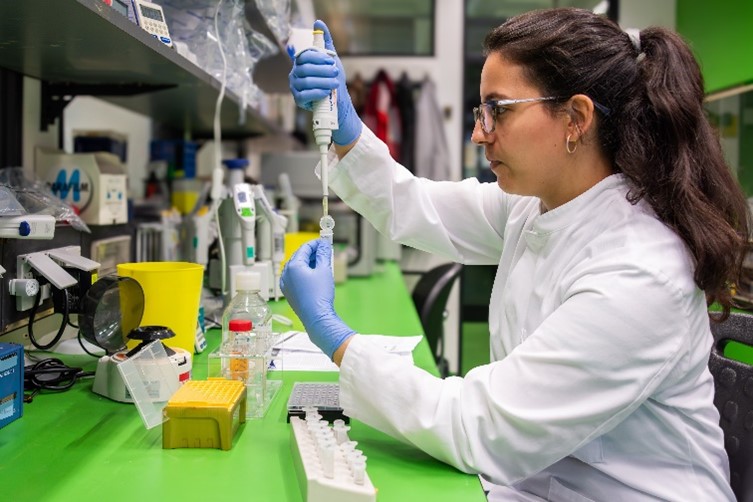
The Teaching and Research Area of Hepatology (Bruns Lab) investigates why patients with cirrhosis develop bacterial infections, systemic inflammation and extrahepatic organ failure. Research focuses on immunological changes in portal hypertension and advanced cirrhosis, on peritoneal immunity and on alterations of the gut-liver axis, and on their contribution to spontaneous bacterial peritonitis (SBP) and acute-on-chronic liver failure (ACLF). In translational approaches, cells and samples from prospective patient cohorts and clinical trials are combined with experimental studies in the laboratory.
Infections and spontaneous bacterial peritonitis (SBP)
Bacterial infections are among the most important triggers of decompensation and organ failure in cirrhosis. The Bruns Lab investigates how bacterial pathogens activate peritoneal immunity, which biomarkers and immunological changes allow the diagnosis of infection and the assessment of outcome, and which treatment is appropriate for infections, including those caused by resistant pathogens.
Gut-liver axis and barriers
In cirrhosis, both the intestinal epithelial barrier and the gut-vascular barrier lose their integrity, so that bacteria and bacterial products can increasingly reach the liver, the circulation and the ascitic fluid and contribute to inflammation and the development of infections. This barrier dysfunction is assessed with functional tests and surrogate markers, and its treatment is investigated in translational approaches, for example in the investigator-initiated TransImmune trial.
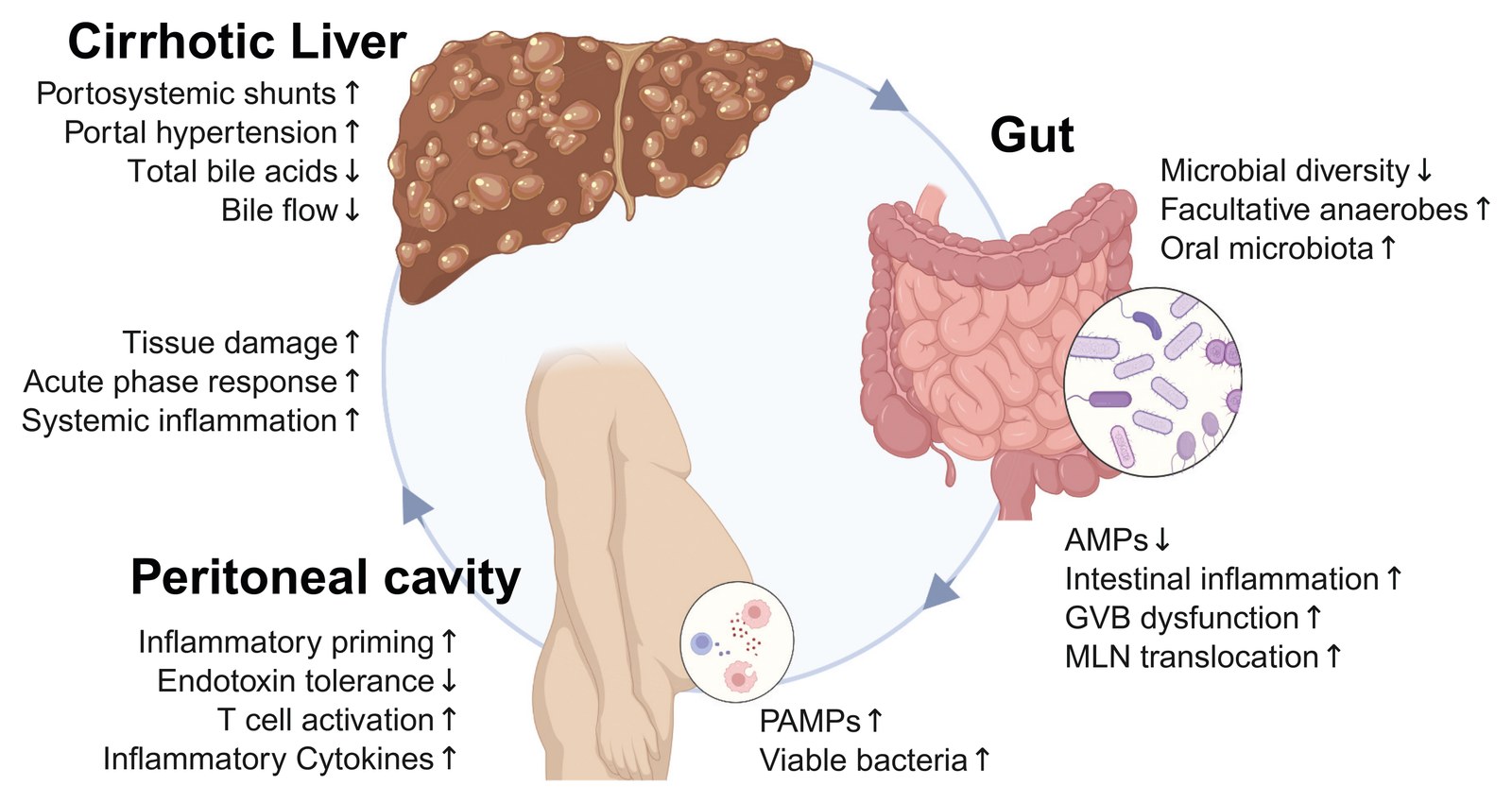
Gut-liver-peritoneum axis in decompensated cirrhosis. Figure from Ibidapo-Obe O, Rooney MD, Bruns T. Expert Rev Clin Immunol 2025;21(10):1355-71, doi:10.1080/1744666X.2025.2565670. Licensed under CC BY-NC-ND 4.0, created with BioRender.
Sepsis and organ failure
Dysregulated inflammation is an essential link between the precipitating infection and subsequent hepatic and extrahepatic organ failure. The Bruns Lab investigates how soluble and cellular mediators contribute to sepsis, acute kidney injury and organ dysfunction in cirrhosis, and how dysregulated immune function can be detected early.
Cirrhosis, ACLF and liver transplantation
ACLF is a syndrome of acute decompensation of cirrhosis with organ failure and high short-term mortality and is frequently precipitated by bacterial infections. Research focuses on the development of prognostic models that describe the transition from acute decompensation to ACLF and quantify the effect of inflammation and organ failure on clinical outcome before and after liver transplantation.
Methods
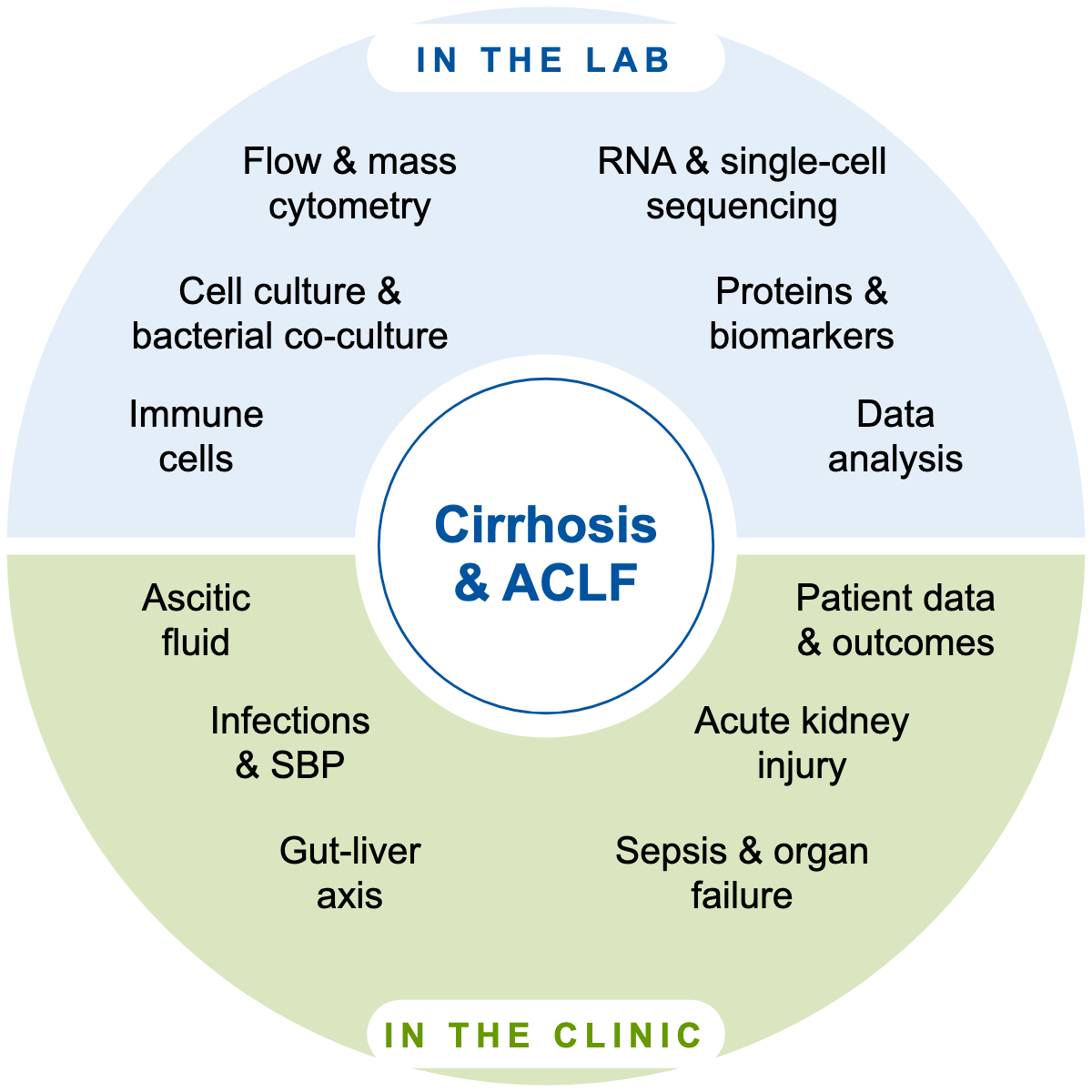
- In the clinic: prospective cohorts and clinical trials with ascitic fluid and blood samples, patient data and long-term outcomes
- In the lab: immune cells from ascitic fluid and blood, cell culture and bacterial co-culture, flow and mass cytometry, RNA and single-cell sequencing, proteins and biomarkers, data analysis
Univ.-Prof. Dr. med. habil. Tony Bruns, Head of the Teaching and Research Area of Hepatology (W3, RWTH Aachen University) and Senior Consultant, Department of Medicine III, University Hospital RWTH Aachen.
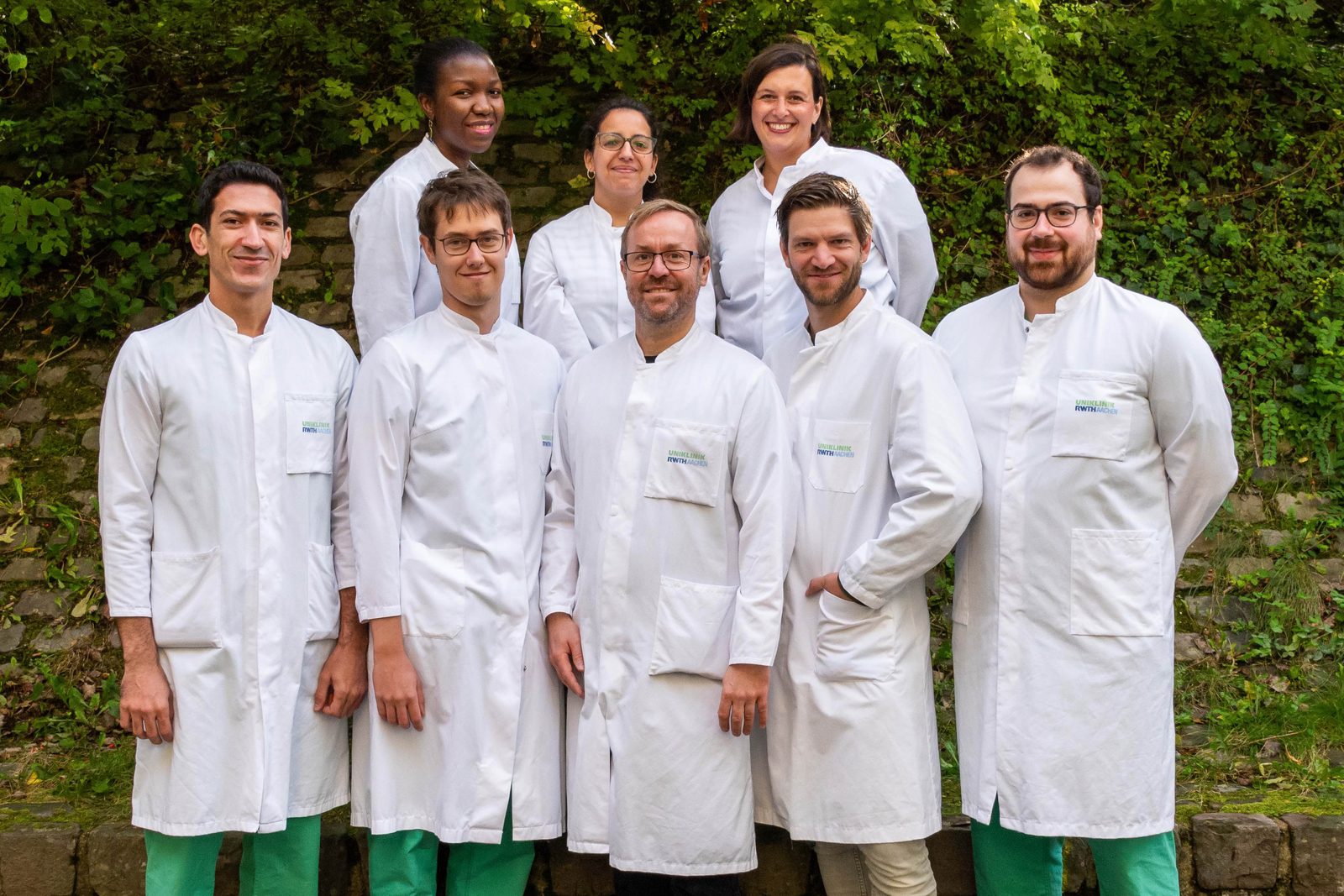
- Dr. rer. nat. Oluwatomi Ibidapo-Obe, postdoctoral researcher
- Dr. rer. nat. Johanna Reißing, postdoctoral researcher
- Mick Frissen, M.Sc., PhD student
- Majda El Hassani, M.Sc., PhD student
- Dr. med. Frederic Haedge, clinician scientist
- Dr. med. Karsten Große, physician
- Dr. med. Mohamad Murad, physician
- Ibidapo-Obe O, Stengel S, Frissen M, Reißing J, Große K, Rooney M, Quickert S, Nguyen TH, Baumgart S, Leal-Lassalle H, Benedé-Ubieto R, Nevzorova YA, Bruns T.
Macrophage-derived IL-15 imprints peritoneal TRM-like CD8 T cells in cirrhosis and spontaneous bacterial peritonitis.
JHEP Rep 2025;7(6):101381. - Haedge F, Reuken PA, Reißing J, Große K, Frissen M, El-Hassani M, Aschenbach R, Teichgräber U, Stallmach A, Bruns T.
Surrogate markers of intestinal permeability, bacterial translocation and gut-vascular barrier damage across stages of cirrhosis.
Liver Int 2025;45(6):e70119. - Rooney M*, Duduskar SN*, Ghait M, Reißing J, Stengel S, Reuken PA, Quickert S, Zipprich A, Bauer M, Russo AJ, Rathinam VA, Stallmach A, Rubio I, Bruns T.
Type-I interferon shapes peritoneal immunity in cirrhosis and drives caspase-5-mediated progranulin release upon infection.
J Hepatol 2024;81(6):971-982. - Reißing J, Berres M, Strnad P, Wree A, Inzaugarat ME, Trautwein C, Bruns T*, Zimmermann HW*.
Th2 cell activation in chronic liver disease is driven by local IL33 and contributes to IL13-dependent fibrogenesis.
Cell Mol Gastroenterol Hepatol 2024;17(4):517-538. - Pabst O, Hornef MW, Schaap FG, Cerovic V, Clavel T, Bruns T.
Gut-liver axis: barriers and functional circuits.
Nat Rev Gastroenterol Hepatol 2023;20(7):447-461.
* shared first or senior authorship
Full list of publications: PubMed
We supervise MD theses in hepatology, including clinical-translational and experimental projects as well as analyses of clinical data, for example on the immunology of ascites, markers of gut barrier dysfunction or the course of ACLF. Interested medical students should send a short email with the subject line “MD thesis hepatology”, a CV, a letter of motivation, a transcript of records (including the first medical examination) and their preferred topic area to tbruns@ukaachen.de. In cooperation with Faculty 1 (Mathematics, Computer Science and Natural Sciences) of RWTH Aachen University, doctoral projects leading to a Dr. rer. nat. (equivalent to a PhD) are also possible; a master’s degree in a natural science is required.
- DFG Collaborative Research Centre 1382 “Gut-Liver Axis” (CRC 1382)
- EU Horizon 2020 DECISION (2020 to 2025, completed)
- IZKF Aachen, Phase Transition in Disease (2023 to 2025, completed)
- European Foundation for the Study of Chronic Liver Failure (EF CLIF)
- European Reference Network RARE-LIVER (ERN RARE-LIVER)
- International Club of Ascites (ICA)
Department of Medicine III, Uniklinik RWTH Aachen, Pauwelsstraße 30, 52074 Aachen, Germany
Email: tbruns@ukaachen.de

